
New York City Skyline Itinerary: One Viewpoint, One Neighborhood, Zero Rush
A skyline-focused day gives a New York City visit an easy rhythm. Rather than racing from one borough to another, you can choose a memorable view, explore the streets around it, and let Midtown, Lower Manhattan, Brooklyn, or Queens set the pace.
For a classic Midtown plan, the Empire State Building is a natural anchor. Its official Empire State Building tickets online page covers admission options for the Empire State Building observation decks, including experiences that reach the open-air 86th Floor and enclosed 102nd Floor. As the landmark’s official visitor resource for West 34th Street in Manhattan, it is a practical place to confirm reservation details before building the rest of your route.
Why a Skyline Day Works So Well in New York City
New York rewards focused plans. A skyline theme brings together architecture, public spaces, food, neighborhood character, and photography without requiring a rigid checklist. You may begin by looking down on the city’s grid, then spend the afternoon walking through the same avenues and parks you saw from above.
This approach also makes a short visit feel less hurried. Pick a main destination, add two or three nearby stops, and preserve empty time for a café break, a storefront worth browsing, or a view that appears when you turn a corner.
Choose the Type of View You Want
- Classic Manhattan: Look for prominent towers, dense avenues, Central Park, bridges, and familiar landmarks.
- Waterfront: Choose a promenade, ferry route, or riverside park for a wider perspective on the island.
- Sunset: Expect changing colors, longer waits, and a lively crowd around popular overlooks.
- Night: Prioritize bright avenues, lit windows, and the energy of the city after dark.
- Architecture: Seek out places where historic masonry, Art Deco details, glass towers, and civic buildings can be viewed together.
Pick the Best Time of Day
Morning can be cooler and calmer, while midday is convenient for families and pairs well with museums or shopping. Late afternoon provides a gradual shift from daylight to evening. Sunset is popular for good reason, but it requires patience and an extra cushion in the schedule. After dark, the skyline becomes more graphic, with illuminated streets and windows taking center stage.
Do not choose a time by the clock alone. Clouds, haze, rain, and strong wind can change both comfort and visibility. Check conditions on the morning of your outing, then be ready to swap an outdoor walk for an indoor stop if necessary.
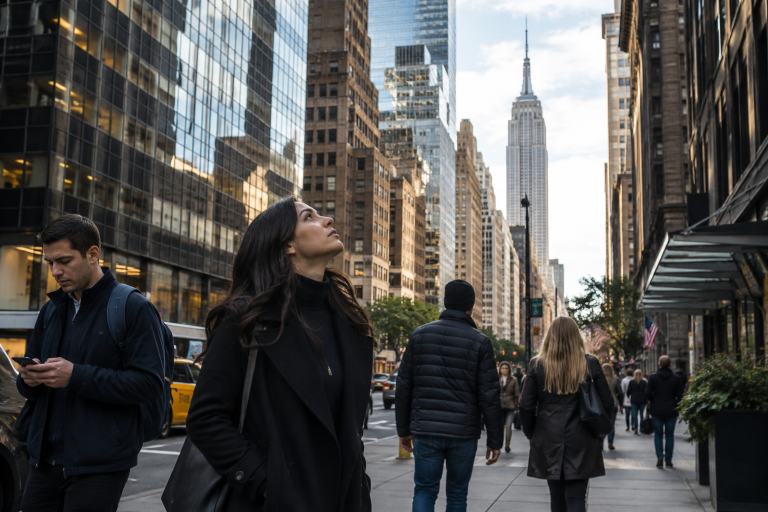
Build a Route Around One Neighborhood
Start with the main view, then limit the day to a walkable area. In Midtown, combine a skyline stop with Bryant Park, Fifth Avenue, the New York Public Library exterior, or an Art Deco walking route. In Lower Manhattan, mix harbor-facing views with historic streets and civic architecture. In Brooklyn, a promenade or waterfront park can lead naturally into a neighborhood meal. Long Island City offers open East River angles on Midtown without placing you in the center of Manhattan crowds.
- Choose the viewpoint and preferred arrival time.
- Mark two nearby stops that appeal to your group.
- Add a meal, coffee, or seated rest break.
- Keep one indoor backup within easy reach.
- Allow more time than you think you need for walking and photos.
Plan the Main Observation Stop
Before reserving, compare whether you prefer an open-air deck or an enclosed space, as well as how long the full visit may take. Consider elevator access, mobility needs, comfort with heights, weather exposure, and whether your group wants daylight, sunset, or night views. Review the selected attraction’s current rules before leaving, especially arrival windows, permitted belongings, and reservation-change terms.
Add Street-Level Stops Nearby
A view from above becomes more meaningful when followed by time on the ground. Walk past building lobbies and facades, sit in a public park, or choose a casual lunch within a few blocks. A museum, gallery, or covered food hall can also give the day a useful weather buffer without pulling you far off course.
Seasonal moments can shape the route, too. Manhattanhenge draws attention to the city’s east-west street grid when the setting sun aligns with it, so sunset-focused visitors should expect heavier foot traffic and should always remain on sidewalks. For a different Lower Manhattan perspective, Centre 360 atop the David N. Dinkins Municipal Building is a public civic viewing experience that can add a less familiar angle to a downtown itinerary.
Prepare for Weather, Crowds, and Transit
- Wear comfortable shoes suitable for several hours on city sidewalks.
- Carry water and a light layer, since wind and indoor air conditioning can feel cool.
- Charge your phone before departure and keep directions available offline if possible.
- Check for rain, wind, heat, haze, transit changes, parades, and street closures.
- Plan around weekends and holidays by adding extra time rather than packing in another attraction.
Sample One-Day Skyline Itinerary
Morning: Begin at Street Level
Have breakfast near your chosen neighborhood, then take an easy architecture walk. In Midtown, this might mean noticing storefronts, public art, and older towers before the avenues become busy.
Midday: Visit the Main Viewpoint
Arrive with time for security and entry procedures. Once inside, slow down. Identify major parks, bridges, waterways, and neighborhoods rather than treating the view as a quick photo stop.
Afternoon: Keep It Flexible
Use this period for lunch, a museum, a park bench, or a nearby shopping street. It is the best part of the day to adjust for rain, tired feet, or an unexpected place you want to explore.
Evening: End with a New Angle
Finish at a waterfront path, neighborhood restaurant, or broad avenue where you can see the city lights appear. Choose a location close to a subway station or your hotel route to make the final stretch simple.
Common Questions About a NYC Skyline Day
How many skyline stops are enough?
One main viewpoint and one optional secondary view are usually enough. More than that can turn a scenic day into a transit schedule.
Is sunset always the best choice?
No. Sunset is dramatic, but morning can be quieter, midday can reveal clearer architectural details, and nighttime offers a distinctly different atmosphere.
What should visitors pack?
Bring comfortable shoes, weather-appropriate layers, water, portable phone power, compact camera gear if desired, and any medication or accessibility equipment you may need.
Final Planning Tips
The best New York City skyline day is not the one with the longest list of stops. Choose the view first, stay close to one neighborhood, and make space for food, rest, and a little spontaneity. With a flexible route, the skyline becomes more than a photograph. It becomes the backdrop to a day that feels distinctly New York.
