Switzerland Trip Planner
Many travel planners suggest brief visits to this alpine nation. People often ask why such a small country like Switzerland needs more than a few days to explore. My 12-day adventure across this amazing country taught me that Switzerland deserves your full attention, even though it ranks among Europe’s most expensive destinations.
The high costs of Swiss travel compared to other European countries are worth every penny. We found Grindelwald to be the perfect spot to experience Switzerland’s true beauty. A well-laid-out 10-day Swiss itinerary lets you enjoy breathtaking spots like Jungfraujoch, known as “the top of Europe”, and scenic rides on the Golden Pass Express. The Swiss Travel Pass makes getting around simple and fun with options for 3, 4, 8, and 15 days.
This piece will help you build your perfect Switzerland itinerary for 2025. You’ll find insider tips that local guides rarely share. I’ve included everything from hidden spots and money-saving tricks to the ideal trip duration. These details will help you plan an unforgettable Swiss holiday.
How to Plan Your Switzerland Trip in 2025
Switzerland isn’t like other European destinations – it needs extra care in planning. My multiple visits have taught me that this small but incredible country needs proper preparation to truly experience its magic. Let me share what I’ve learned about making the most of your Swiss adventure.
Choosing the right number of days
The sweet spot for a Swiss trip is seven to ten days – enough time to see the best parts without rushing. I learned this the hard way when I could only stay four days and missed out on the stunning Lauterbrunnen Valley.
Here’s what you can do with different timeframes:
- 3 days: Stick to the Lauterbrunnen Valley (Berner Oberland)
- 5 days: Take in Lucerne and Central Switzerland too
- 7 days: Add Bern and Lake Geneva, linked by the Golden Pass scenic rail trip
- 10 days: See Zermatt and Appenzell, connected by the Glacier Express train
- 14 days: Round it off with Lugano and Upper Engadine
Swiss trains run like clockwork, but each region deserves enough time to soak in its unique charm.
Best time to visit Switzerland
Each season in Switzerland brings something special, though mid-May through September gives you the most reliable weather for outdoor activities.
Summer (June-August): Peak season temperatures hit 20-25°C, perfect for hiking and mountain activities. The sun stays up past 21:00, and you can catch amazing events like Swiss National Day on August 1st.
Fall (September-November): This is when I love visiting most. The mercury stays between 8-15°C, crowds thin out, and the autumn colors are spectacular. You might catch traditional cattle parades in mountain villages too.
Winter (December-March): Ski lovers thrive in temperatures from -2°C to 5°C. The Christmas markets and Fasnacht carnival add cultural flair.
Spring (March-May): A great time to avoid crowds and see flowers bloom, as temperatures climb from 8°C to 15°C.
Trip planner tools and apps to use
Modern tech makes Swiss travel a breeze. These apps are essential companions:
Transportation apps:
- SBB Mobile: Your go-to for live schedules, e-tickets, and service updates
- Swiss Travel Guide: A complete package with 500 attractions, offline maps, SBB times, and money-saving coupons
- PostBus Switzerland: The ultimate route planner for all transport types
Weather and orientation:
- MeteoSwiss: The country’s official weather app with detailed mountain forecasts and alerts
- PeakFinder: Points out mountain names and heights as you scan the peaks
- Maps.me: Save offline maps before you go to find your way without data
Money-saving tools:
- Too Good To Go: Cut food costs with discounted meals
- MyCurrency: Quick Swiss Franc conversions
Wanderlog shines as a free trip planner that works offline, with impressive ratings of 4.9 on App Store and 4.7 on Google Play.
Many first-timers miss out on the Grand Train Tour app, but it’s a must-have. It shows Switzerland’s most scenic rail routes and exclusive deals – perfect for anyone wanting to experience those famous Swiss train journeys.
Getting Around Switzerland Like a Local
The Swiss public transportation system ranks among the world’s best. My extensive travels through this compact country proved that Swiss trains, busses, and boats can turn an ordinary trip into something special.
Why the Swiss Travel Pass is worth it
The Swiss Travel Pass makes a huge difference when you plan your Switzerland trip. This all-in-one ticket lets you travel anywhere on the Swiss Travel System network without limits. You’ll also get free entry to more than 500 museums across the country.
The pass offers amazing value with these benefits:
- Complete coverage: You get access to premium panoramic trains like the Glacier Express and Bernina Express (just pay for seat reservations)
- Mountain excursions: Full coverage of Stanserhorn, Rigi, and Stoos mountains, plus half-price deals on other mountain railways
- Urban mobility: Free public transportation in more than 90 Swiss cities and towns
An 8-day pass worked great for my 10-day Switzerland trip. I used it on days with expensive trips. You can choose passes that last 3, 4, 6, 8, or 15 consecutive days. Kids under 16 travel free when their parents have a Swiss Travel Pass.
Scenic train routes you shouldn’t miss
Swiss panoramic train routes offer some of the world’s most amazing rail trips. The Bernina Express tops my list. It crosses 196 bridges and 55 tunnels as it climbs the stunning Bernina Pass at 7,391 feet above sea level.
People call the Glacier Express the “Slowest Express Train in the World.” It links Zermatt and St. Moritz through spectacular Alpine landscapes. The GoldenPass line takes you past eight lakes and peaks reaching 4000 meters.
The Grand Train Tour of Switzerland gives you the ultimate rail adventure. It connects all premium panoramic trains in one amazing 1,280 km journey. The Swiss Travel Pass covers most scenic routes. You just pay reservation fees between 10-49 CHF depending on the route.
Tips for using public transport efficiently
Swiss public transportation reaches almost everywhere in the country. Most Swiss people rely on public transport—54% use it daily and 94% say it works well. You can blend in with locals if you follow these tips:
The SBB Mobile app should be your first download. It shows schedules, e-tickets, and service updates in real time. This official Swiss Federal Railways app makes travel simple.
You don’t need reservations for most Swiss trains and busses—just hop on with your Swiss Travel Pass. Keep your passport or ID card handy since controllers might check your identity.
Plan multi-transport days to get the most value. You can take a train between cities, catch a boat across a lake, and ride a bus to a mountain village all in one day. Switzerland’s compact size means you can reach most major cities from Zurich in 1-2 hours.
Swiss transportation shows what makes this country special—it’s precise, on time, and covers everything you need.
Hidden Gems Most Guides Don’t Mention
Switzerland has more to offer than just picture-perfect views of the Matterhorn. My adventures off the beaten path through this alpine wonderland have led me to memorable spots you won’t find in typical Switzerland trip guides.
Underrated towns to add to your itinerary
Appenzell should be your first stop in northeastern Switzerland. This gem features vibrant painted buildings and authentic Swiss culture without Lucerne’s tourist crowds. The nearby village of Stein am Rhein will amaze you with its stunning medieval frescoes on buildings from the 16th century.
Gruyères deserves a spot on your list – not just because of its famous cheese. The town’s perfectly preserved medieval architecture stands alongside the unexpected H.R. Giger Museum (creator of “Alien”). Your 10-day Switzerland itinerary should definitely include Murten. The town’s intact medieval walls offer spectacular lake views from the top.
Local food spots beyond tourist traps
Skip the overpriced tourist-trap fondue. Here are some authentic culinary experiences you’ll love:
- Mountain cheese dairies: Käserei Schmidiger in Sörenberg lets you watch morning cheese-making and taste fresh products
- Forest foraging: Local guides take you mushroom or berry picking in Interlaken’s forests
- Wine routes: Lavaux vineyards near Montreux, a UNESCO site, has family-run wineries that offer tastings with breathtaking Lake Geneva views
Bern’s Saturday market is a must-visit spot. You’ll find regional specialties at prices way below restaurant rates.
Unique experiences like tobogganing and cliff walks
Switzerland offers thrilling adventures that most planners overlook. Summer tobogganing on metal tracks gets your adrenaline pumping. The Pfingstegg run near Grindelwald and Fräkmüntegg on Mount Pilatus let you slide while enjoying spectacular forest views.
Grindelwald’s First Cliff Walk delivers an unmatched experience with walkways bolted into rock faces, giving you amazing views of the Eiger. The Aletsch Glacier suspension bridge spans 124 meters above massive ice flows and makes an unforgettable addition to your trip.
Your Switzerland 10-day itinerary should have room for unexpected finds. These hidden spots often turn a good vacation into an unforgettable trip through one of Europe’s most remarkable countries.
Sample Itinerary for 10 Days in Switzerland
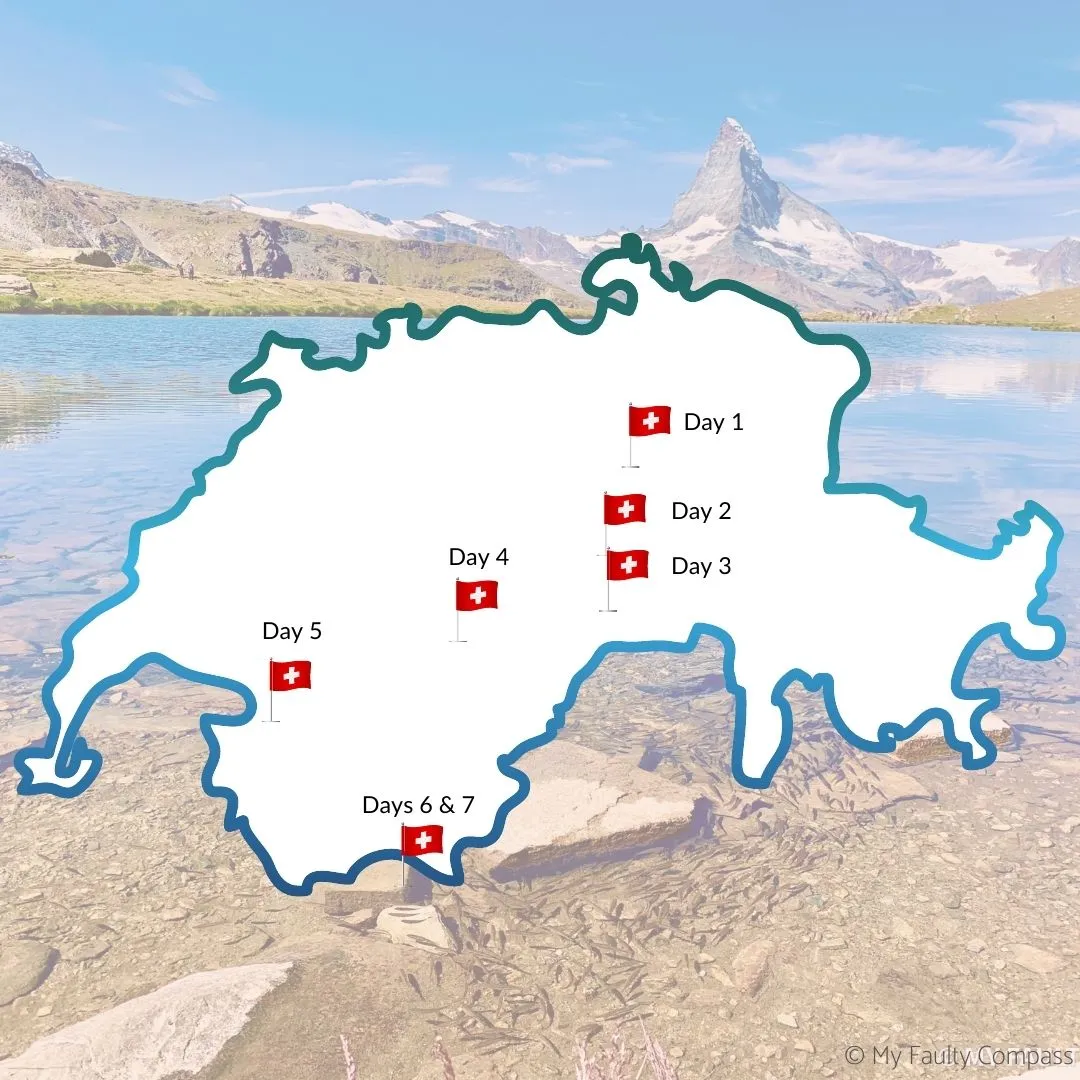
I spent hours looking through Switzerland travel guides to create this 10-day itinerary. It mixes must-see attractions with hidden local spots.
Day 1-2: Lucerne and Mount Pilatus
Your Swiss adventure starts in beautiful Lucerne. The first day takes you through the historic Old Town. You’ll walk across the medieval Chapel Bridge and see the touching Lion Monument.
Day two brings the amazing Golden Round Trip to Mount Pilatus. A boat takes you across Lake Lucerne to Alpnachstad. From there, you’ll ride the world’s steepest cogwheel railway with its 48° gradient. The summit stands at 2,132 meters with stunning panoramic views. You might want to stay overnight at the historic Hotel Pilatus Kulm. The descent includes the exciting “Dragon Ride” aerial cableway to Fräkmüntegg. Here’s your chance to try Switzerland’s longest summer toboggan run. A scenic gondola ride to Kriens and a bus back to Lucerne complete your day.
Day 3-4: Interlaken and Lauterbrunnen
Next stop is Interlaken, your doorway to the stunning Bernese Oberland. Here’s a perfect schedule for the Lauterbrunnen Valley:
- Morning: Ride the Schilthornbahn cable car to Piz Gloria for brunch with Matterhorn views
- Midday: Take on the thrilling Birg Thrill Walk and hike the Northface Trail
- Afternoon: Visit Sprutz Waterfall while paragliders soar overhead
Day four gives you options. Take a trip to Jungfraujoch, “Top of Europe.” Or catch the train to Grindelwald (45 minutes) and hop on the Eiger Express Gondola to Europe’s highest railroad station.
Day 5-6: Zermatt and the Matterhorn
The next stop is car-free Zermatt, right at the Matterhorn’s base. This charming village of wooden houses is over 500 years old and offers views of 38 four-thousand-meter peaks. Day five lets you wander the village center, browse souvenir shops, and visit the Matterhorn museum to learn about the first climb in 1865.
Day six takes you up Europe’s highest cable car to Matterhorn Glacier Paradise. The views are exceptional, and the ride up shows off spectacular mountain scenery.
Day 7-8: St. Moritz via Glacier Express
Day seven puts you on the famous Glacier Express—locals call it the “slowest express train in the world.” This narrow-gage route crosses 291 bridges and 91 tunnels between Zermatt and St. Moritz. Book your seat early since they fill up fast.
St. Moritz welcomes you on day eight. This stylish mountain village sits 1800 meters above sea level and enjoys 300 sunny days each year.
Day 9-10: Lugano and Lake Como
The final stretch brings you to sunny Lugano in Italian-speaking Ticino. The elegant lakeside promenade and chic boutiques await your exploration. Make time for Chiesa di Santa Maria degli Angeli to see its beautiful Renaissance fresco by Bernardino Luini, Leonardo DaVinci’s student.
Your last day features a quick 45-minute train ride to Lake Como in Italy. The trip ends perfectly in Bellagio, the “Pearl of Lake Como,” where cobblestone streets and lake views create lasting memories.
Budgeting Tips You Won’t Hear from Tour Companies
Let’s face it—Switzerland’s reputation as a budget-buster isn’t undeserved, but there are insider strategies most tour operators keep to themselves. My first Swiss trip left me shocked at my bank statements. Now I know how to enjoy this alpine paradise without stressing about money.
How to save on food and accommodation
Mountain villages make better bases than major cities. Places like Lauterbrunnen cost less than Interlaken and come with better views! You’ll save 10-15% on accommodations by booking apartments through local sites instead of international platforms.
Food costs drop fast when you:
- Shop at Migros or Coop supermarkets to pack picnics
- Look for “Tagesmenü” (daily specials) at restaurants that cost half the regular menu prices
- Fill water bottles at Switzerland’s 1,200+ public fountains with clean drinking water
Free and discounted activities with Swiss Pass
Swiss Pass opens doors to more than just transportation. You get free entry to over 500 museums and complimentary boat cruises on most lakes. Mountain trips like Rigi become affordable with included or heavily discounted rides.
When to splurge and when to save
Pick your must-have experiences first—maybe it’s Jungfraujoch or that dream night in a luxury hotel—then cut costs elsewhere. Remember that some premium options, like first-class train travel, are nowhere near worth the extra cost over second-class alternatives. Your Switzerland trip should mix special splurges with smart savings on regular expenses that don’t add value to your experience.
Summing all up
Switzerland is a traveler’s paradise that just needs careful planning to truly appreciate. My experience through this alpine wonderland has shown me that extra days and good preparation make all the difference.
Swiss prices might shock you at first, but the amazing experiences are worth every franc. The stunning Matterhorn views, the excitement at Jungfraujoch’s peak, and charming wooden-house villages like Zermatt create memories that are priceless.
The Swiss Travel Pass becomes your greatest companion on this adventure. This single ticket gives you access to countless museums, scenic train rides, and mountain trips without any transport hassles. Kids under 16 travel free with their parents, which makes family trips much easier on the wallet.
Your Swiss experience becomes richer when you look beyond famous spots. Towns like Appenzell, Gruyères, and Murten let you soak in authentic Swiss culture away from big crowds. Local markets and mountain cheese dairies serve up tasty food that beats tourist restaurants easily.
Weather plays a big role in planning your visit. Summer brings perfect hiking weather, fall shows off gorgeous colors with fewer tourists, winter turns everything into a snowy paradise, and spring fills alpine meadows with flowers.
My time in Switzerland taught me this small country packs an amazing variety of experiences. Thanks to great transport links, you can have breakfast by a crystal-clear lake, lunch in a medieval town, and dinner high up in the mountains all in one day.
Switzerland asks more from travelers than other places, both money-wise and planning-wise. Yet people who take time to plan their trip well find a country that goes beyond what they imagined. A Swiss adventure waits for you—packed with mountain thrills, cultural finds, and views so beautiful they seem unreal.
Here are some FAQs about Switzerland trip planner:
How many days is enough for a Switzerland trip?
A 7-10 day trip is ideal for experiencing Switzerland’s highlights, allowing time for cities, mountains, and lakes. For shorter visits, a Switzerland 2 days trip planner can help focus on key areas like Zurich and Lucerne. Using a Switzerland trip planner map helps maximize your itinerary whether you have a week or just a weekend. Keywords include Switzerland by train itinerary and trip planner for Switzerland.
How much will a Switzerland trip cost?
Switzerland is known for being expensive, with average daily costs of $200-$300 per person for mid-range travel. A detailed trip planner Switzerland can help budget for accommodations, transport (especially trains via Switzerland by train itinerary), and meals. The Switzerland trip planner map helps identify cost-saving options like regional passes and budget hotels. Keywords include Switzerland Trip Planner and trip planner for Switzerland.
How do I plan a Switzerland itinerary?
Start by prioritizing your must-see destinations and using a Switzerland trip planner map to visualize routes. A good trip planner Switzerland will balance city time (Zurich, Geneva) with alpine experiences (Jungfrau, Zermatt). For train travel, consult a Switzerland by train itinerary to optimize your schedule and passes. Keywords include Switzerland 2 days trip planner and trip planner for Switzerland.
Which month is the best to go to Switzerland?
June through September offers the best weather for outdoor activities and alpine hiking, according to most Switzerland Trip Planner guides. For winter sports, December to March is ideal, as noted in many trip planner Switzerland resources. Shoulder seasons (April-May, October) provide fewer crowds and lower prices in Switzerland trip planner map suggestions. Keywords include Switzerland by train itinerary and trip planner for Switzerland.
Is Switzerland expensive to visit?
Yes, Switzerland ranks among Europe’s most expensive destinations, as any trip planner Switzerland will note. However, a well-designed Switzerland Trip Planner can help manage costs through rail passes, picnic meals, and careful accommodation choices. The Switzerland trip planner map helps identify budget-friendly regions and free natural attractions. Keywords include Switzerland 2 days trip planner and trip planner for Switzerland.
How far is Zurich to Geneva by train?
The train from Zurich to Geneva takes about 2 hours 45 minutes on direct routes, as shown on any Switzerland trip planner map. A Switzerland by train itinerary would highlight this scenic journey along Lake Geneva’s shores. The trip planner Switzerland often recommends this route as one of Switzerland’s most efficient connections. Keywords include Switzerland Trip Planner and trip planner for Switzerland.
What month is it cheaper to go to Switzerland?
November and April typically offer the lowest prices, according to trip planner Switzerland resources. These shoulder months appear on Switzerland trip planner maps as good value periods between peak seasons. A Switzerland 2 days trip planner can help maximize savings during these less crowded months. Keywords include Switzerland by train itinerary and trip planner for Switzerland.
How much money will I need for 4 days in Switzerland?
For 4 days, budget around $800-$1200 per person including mid-range hotels and meals, as suggested in Switzerland Trip Planner estimates. A focused Switzerland 2 days trip planner approach can help stretch your budget for shorter stays. The trip planner Switzerland would recommend rail passes and city cards to reduce transportation costs. Keywords include Switzerland trip planner map and Switzerland by train itinerary.